When choosing coffee beans, one of the most important factors to consider is where the coffee was grown. Coffee bean origin can have a significant influence on the bean’s flavor, aroma, acidity, body, and overall quality.
Different coffee-growing regions have unique climates, altitudes, soil conditions, coffee varieties, and processing methods. These factors work together to create the distinctive characteristics found in coffee beans from different origins.
Whether you are a coffee enthusiast, roaster, café owner, or business buyer, understanding coffee bean origin can help you choose the right beans for your requirements.
Why Does Coffee Bean Origin Matter?
Coffee is an agricultural product, which means its characteristics are strongly influenced by its growing environment. The combination of altitude, climate, soil, rainfall, temperature, coffee variety, and processing method can affect how the beans develop.
This is why coffee beans from Brazil may taste different from beans grown in Ethiopia, India, or Vietnam, even when they are roasted in a similar way.
The origin of a coffee bean can influence:
- Flavor profile
- Aroma
- Acidity
- Body
- Sweetness
- Aftertaste
- Bean density
- Overall cup characteristics
Understanding these differences is particularly important when selecting coffee beans for roasting, blending, cafés, restaurants, or wholesale supply.
How Growing Region Influences Coffee Flavor
1. Altitude
Altitude is an important factor in coffee production. Coffee grown at higher elevations generally develops more slowly because of cooler temperatures. This slower development can contribute to greater complexity in the bean.
Higher-altitude coffees are often associated with brighter acidity and more complex flavor characteristics, although altitude alone does not determine coffee quality.
Lower-altitude coffee-growing regions can produce beans with a fuller body and different flavor characteristics.
2. Climate
Temperature, rainfall, sunlight, and seasonal conditions all influence coffee plant growth.
A stable climate can help coffee cherries develop consistently, while differences in rainfall and temperature can influence the size, density, and flavor development of the coffee beans.
Because growing conditions vary between countries and regions, coffee from different origins can have noticeably different characteristics.
3. Soil
The soil in which coffee plants grow provides nutrients that support the development of the coffee plant and cherries.
Different coffee-growing regions have different soil compositions, which can contribute to differences in the characteristics of the final coffee.
Soil is only one part of the equation, however. Variety, altitude, climate, farming practices, harvesting, processing, and roasting also play important roles.
How Coffee Processing Affects Origin Characteristics
Origin is important, but it is not the only factor that determines coffee flavor.
After coffee cherries are harvested, they can be processed using different methods, including:
- Washed processing
- Natural processing
- Honey processing
The processing method can significantly influence the final flavor profile.
Washed coffees are often associated with cleaner and brighter characteristics, while naturally processed coffees can have more pronounced fruity and sweet notes. Honey processing can offer characteristics between the two.
This means that two coffees from the same country can still taste very different depending on their variety, processing method, growing region, and other production factors.
Popular Coffee Origins and Their Characteristics
Different coffee origins are known for different styles and characteristics. However, these should be considered general tendencies rather than strict rules, because flavor can vary significantly between farms, regions, varieties, grades, and processing methods.
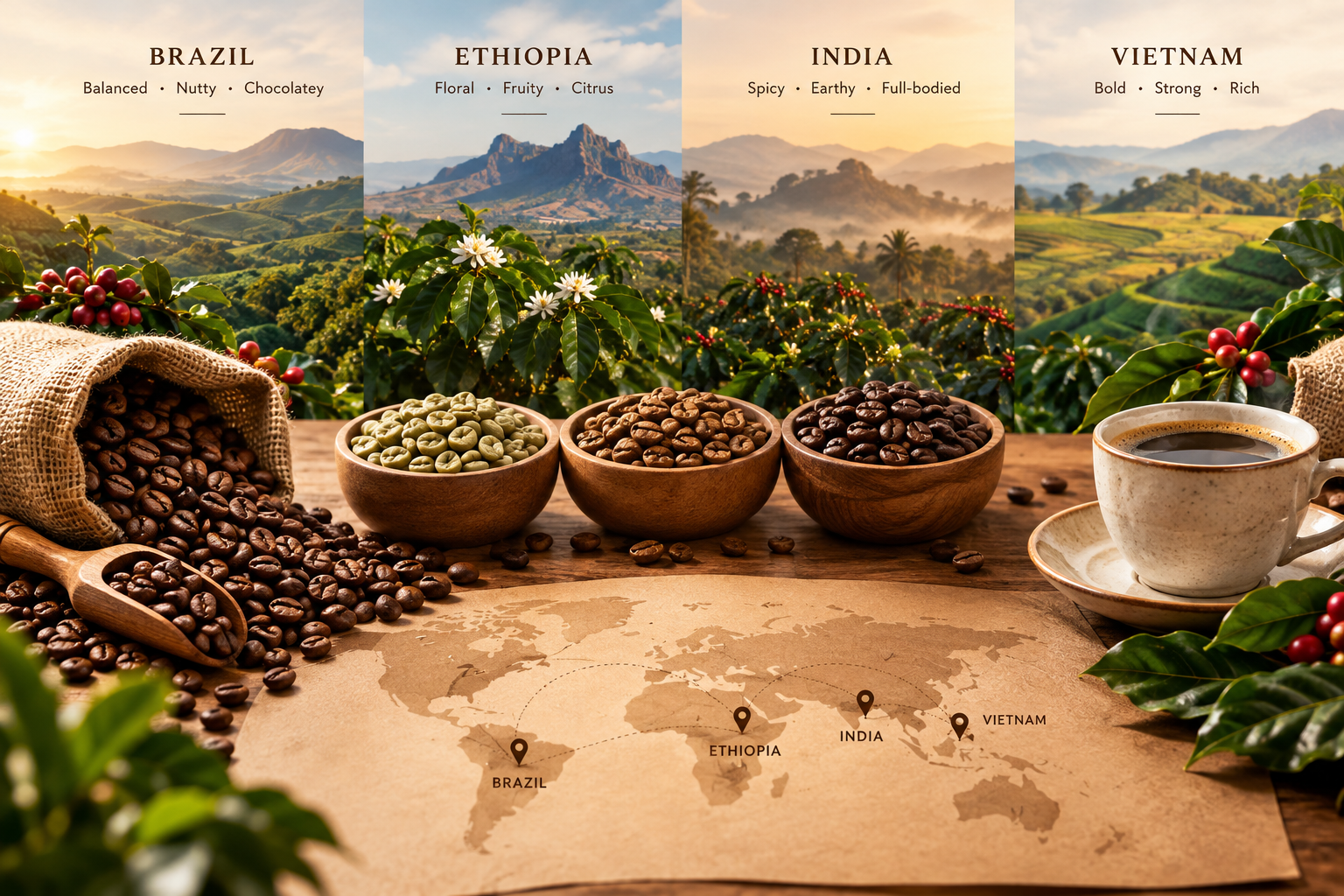
Brazil Coffee Beans
Brazil is one of the world’s major coffee-producing countries and is well known for both Arabica and Robusta coffee production.
Brazilian coffee is commonly associated with balanced flavor, body, sweetness, and nutty or chocolate-like characteristics, depending on the region and processing method.
Brazil coffee beans are widely used for both single-origin coffees and blends.
Ethiopian Coffee Beans
Ethiopia is widely recognized for its diverse coffee-growing regions and distinctive Arabica coffees.
Ethiopian coffee beans are often associated with floral, fruity, citrus, and complex flavor characteristics. However, the profile can vary considerably depending on the specific region, variety, and processing method.
Indian Coffee Beans
India produces both Arabica and Robusta coffee beans, with coffee cultivation concentrated in several southern regions.
Indian coffee can offer balanced, smooth, spicy, earthy, nutty, or full-bodied characteristics depending on the origin, variety, grade, and processing method.
India is also an important origin for businesses looking for both Arabica and Robusta coffee beans.
Vietnam Coffee Beans
Vietnam is particularly well known for its Robusta coffee production.
Vietnamese Robusta coffee beans are commonly associated with a strong body, pronounced bitterness, and bold coffee character. They are widely used in espresso blends, instant coffee production, and other commercial applications.
Arabica vs Robusta: Does Origin Matter?
Yes. Origin can influence both Arabica and Robusta coffee beans, but the two species naturally have different characteristics.
Arabica coffee beans are generally known for more complex flavor profiles, aromatic qualities, and varied acidity.
Robusta coffee beans are typically known for stronger body, higher bitterness, and a more intense coffee character.
However, the final quality and flavor depend on much more than species alone. Origin, variety, altitude, farming practices, processing, grading, storage, and roasting all contribute to the final result.
Does Coffee Origin Determine Quality?
Not necessarily.
A particular country or region does not automatically mean that every coffee bean from that origin will have the same quality.
Coffee quality depends on several factors, including:
- Coffee variety
- Growing conditions
- Altitude
- Harvesting practices
- Cherry ripeness
- Processing method
- Bean grade and size
- Moisture and storage conditions
- Transportation
- Roasting quality
For this reason, it is better to evaluate coffee based on its specific origin, grade, characteristics, processing, and intended use rather than choosing beans based only on country.
How to Choose Coffee Beans Based on Origin
When selecting coffee beans, consider what type of coffee you want to produce and how the beans will be used.
For example:
For balanced and versatile coffee:
Consider origins and varieties known for balanced body, sweetness, and flavor.
For fruity and aromatic profiles:
Ethiopian Arabica and other high-quality Arabica origins may be worth exploring.
For bold and full-bodied coffee:
Robusta origins such as Vietnam or India can be suitable depending on the desired cup profile.
For commercial blends:
Combining Arabica and Robusta from suitable origins can help create a balance of aroma, body, strength, and cost.
For businesses, the right choice ultimately depends on the desired flavor profile, roasting requirements, volume, consistency, and target customers.
Why Origin Matters for Wholesale Coffee Buyers
For cafés, restaurants, hotels, retailers, roasters, and other businesses, understanding coffee origin is especially important.
A reliable coffee bean supplier should be able to provide relevant information about the beans, including:
- Country and region of origin
- Arabica or Robusta variety
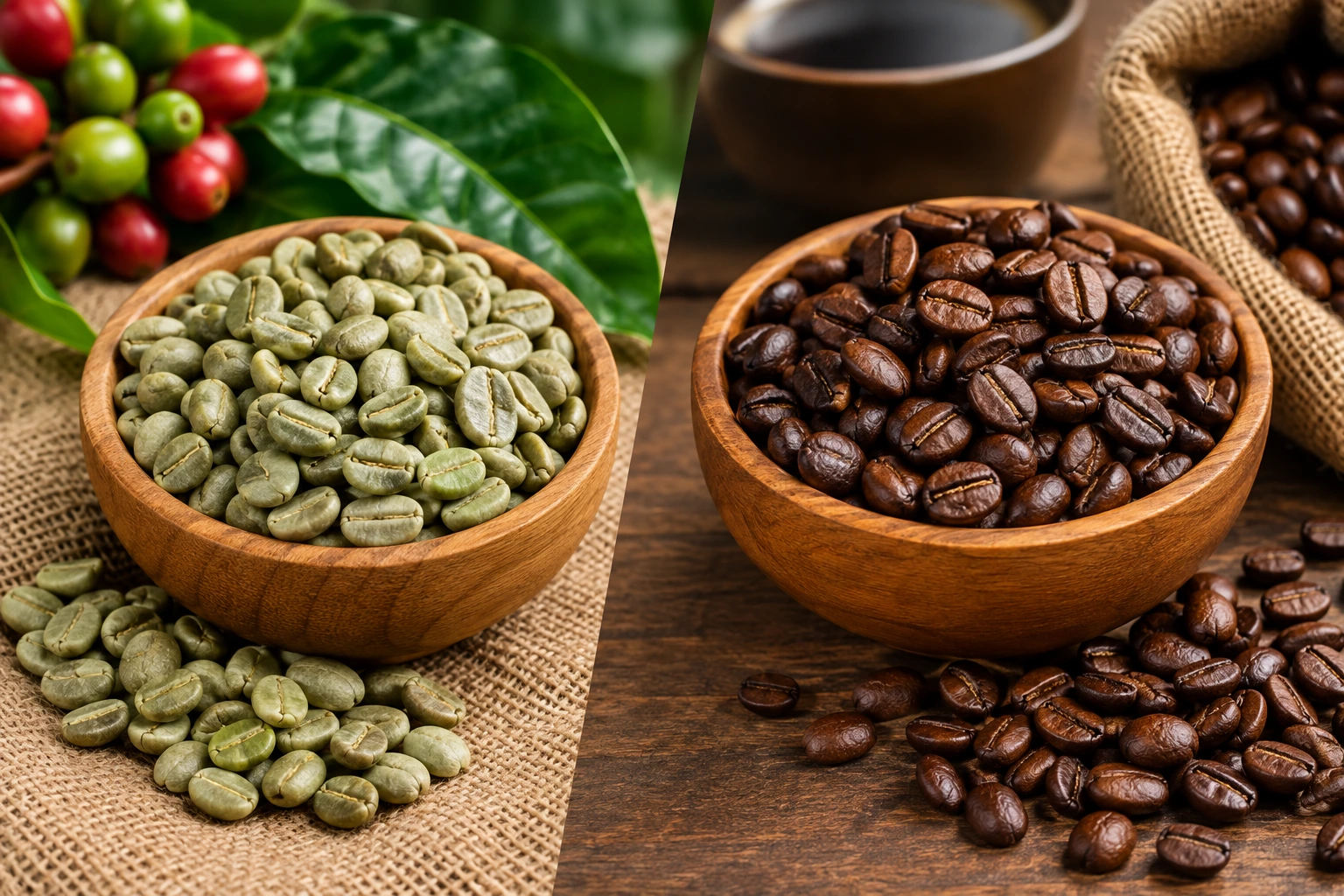
- Green or roasted coffee
- Bean grade or screen size where applicable
- Processing method
- Available quantity
- Product specifications
- Packaging and supply options
Choosing the right origin can help businesses develop a consistent coffee offering that matches their customers’ preferences.
Choose Coffee Beans Based on Your Requirements
At Stork Beans, we focus on supplying carefully selected coffee beans from renowned origins for customers and businesses looking for quality and reliable coffee bean supply.
Our range includes green coffee beans and roasted coffee beans, with options including Arabica and Robusta from origins such as Brazil, Ethiopia, India, and Vietnam.
Whether you are looking for coffee beans for roasting, blending, cafés, restaurants, retail, or wholesale requirements, selecting the right origin is an important step toward finding the right coffee for your needs.
Final Thoughts
Coffee bean origin plays an important role in shaping the characteristics of coffee. Altitude, climate, soil, variety, processing, and farming practices all contribute to the final flavor and quality of the beans.
Brazil, Ethiopia, India, Vietnam, and other coffee-producing regions each offer different possibilities for coffee buyers and roasters.
The best coffee bean is not simply determined by its country of origin. Instead, the right choice depends on the specific bean, quality, characteristics, processing method, roasting requirements, and intended use.
Explore coffee beans from different origins and discover the characteristics that best suit your coffee requirements with Stork Beans.
Stork Beans — Quality Coffee Beans from Origin to Your Business.